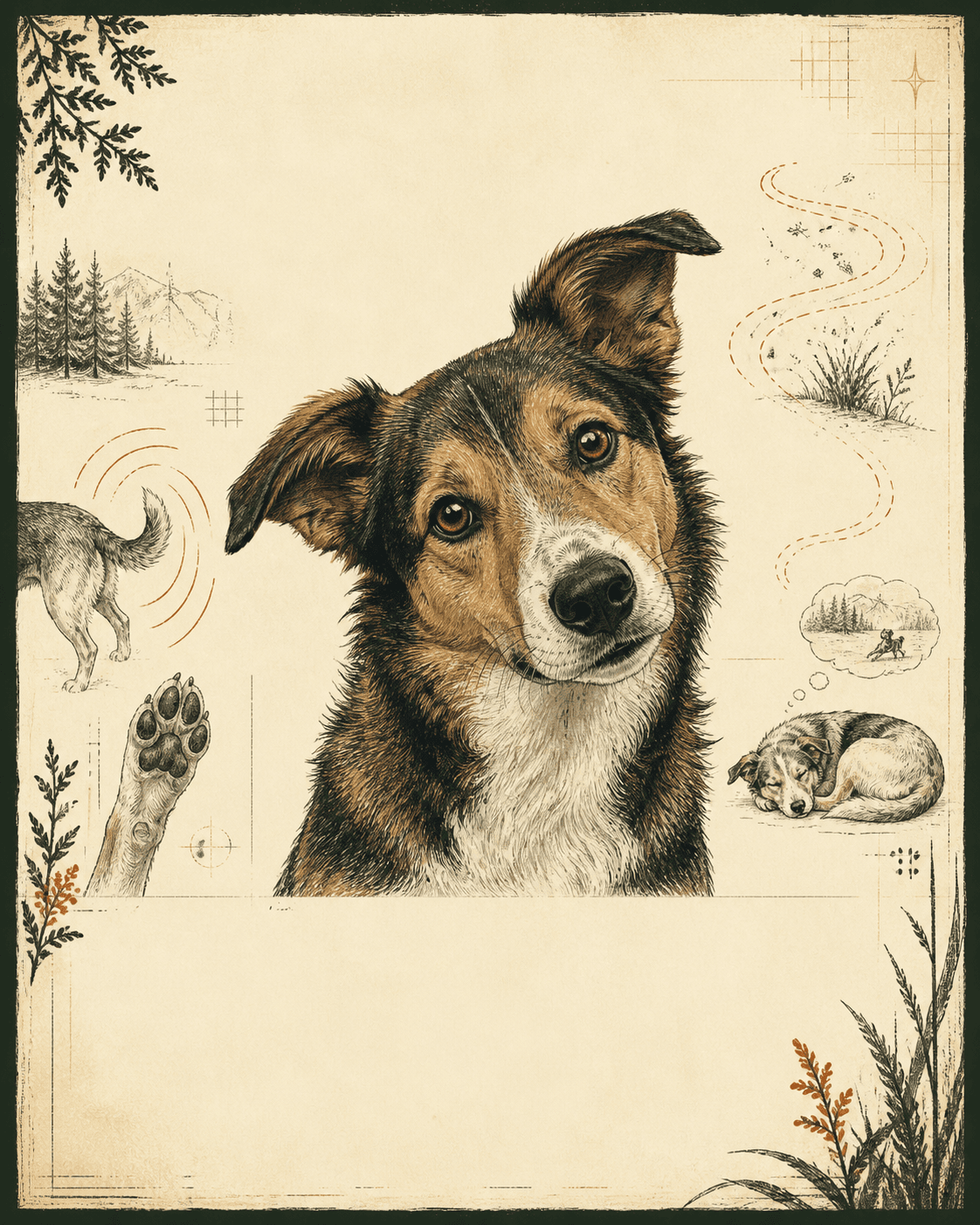
Illustrated curious dog surrounded by field-note sketches

Why Do Animals Do That? · Dog Edition

DECODED

31 Everyday
Dog Behaviors

WHAT WE KNOW · WHAT TO WATCH · WHEN TO GET HELP

The first Why Do Animals Do That? field guide

Decoded

31 Everyday Dog Behaviors

A practical guide for the moment you catch yourself asking, “Why did my dog just do that?” Read the short answer first, then the context, next step, safety line, and evidence behind it.

31 one-sitting entries Named evidence sources Red flags stated plainly 49-page phone-friendly PDF

Inside the guide

Six ways into the mystery.

Browse all 31 entries by the kind of clue you are seeing.

Energy & play

  1. 01Zoomies
  2. 07Bringing toys
  3. 25Tail chasing
  4. 26Mounting

Connection & communication

  1. 02Tail wagging
  2. 03Head tilting
  3. 04Licking people
  4. 05Following you
  5. 06Leaning on you
  6. 08Pawing
  7. 09Belly-up
  8. 24Howling
  9. 31Staring

Rest & regulation

  1. 10Sighing
  2. 11Yawning
  3. 12Dry shake-off
  4. 13Sleep twitching
  5. 14Bedtime circling

Instinct & exploration

  1. 15Digging
  2. 16Chewing objects
  3. 17Burying valuables
  4. 22Rolling in smells

Bathroom & body

  1. 18Eating grass
  2. 19Eating feces
  3. 20Scooting
  4. 21Post-potty kicking

Stress & safety

  1. 23Window barking
  2. 27Resource guarding
  3. 28Distress when alone
  4. 29Growling
  5. 30Stress signals

Three sample entries

Six complete samples are free. All 31 complete entries are in the guide.

Entry 01 · Energy & play

Why does my dog suddenly get the zoomies?

Those wild laps are commonly called frenetic random activity periods, or FRAPs. They often show up around excitement, transitions, pent-up energy, or stress release, especially in younger dogs.

Urgent if there is collapse: Collapse is an emergency. Contact a veterinarian promptly if the running is new and disoriented, looks painful, cannot be interrupted, or repeatedly follows a frightening event.

Entry 03 · Connection & communication

Why does my dog tilt their head when I talk?

Head tilting may help some dogs process a familiar sound or meaningful word, but it is not a universal canine translation device. Hearing, vision, attention, and learned human reactions may all contribute.

When to call: A new persistent tilt, loss of balance, circling, abnormal eye movement, ear pain, odor, or scratching needs veterinary attention.

Entry 29 · Stress & safety

Should I correct my dog for growling?

A growl is valuable information that the dog is uncomfortable, threatened, conflicted, guarding, or highly aroused. Silencing it does not resolve the reason behind it.

When to call: Treat any growling around children, handling, pain, food, or unpredictable triggers seriously—especially with a snap or bite history.

Launch edition · $9

Keep the complete decoder within paw’s reach.

One payment. No subscription. Download all 49 pages after checkout, including complete context, practical next steps, safety cues, and the source ledger.