What are we actually seeing?
Name the observable behavior before assigning a motive. Frequency, posture, trigger, and recovery matter.
Start with 31 free short answers and safety cues. Then keep the complete context, practical next steps, and source notes in a phone-friendly field guide.
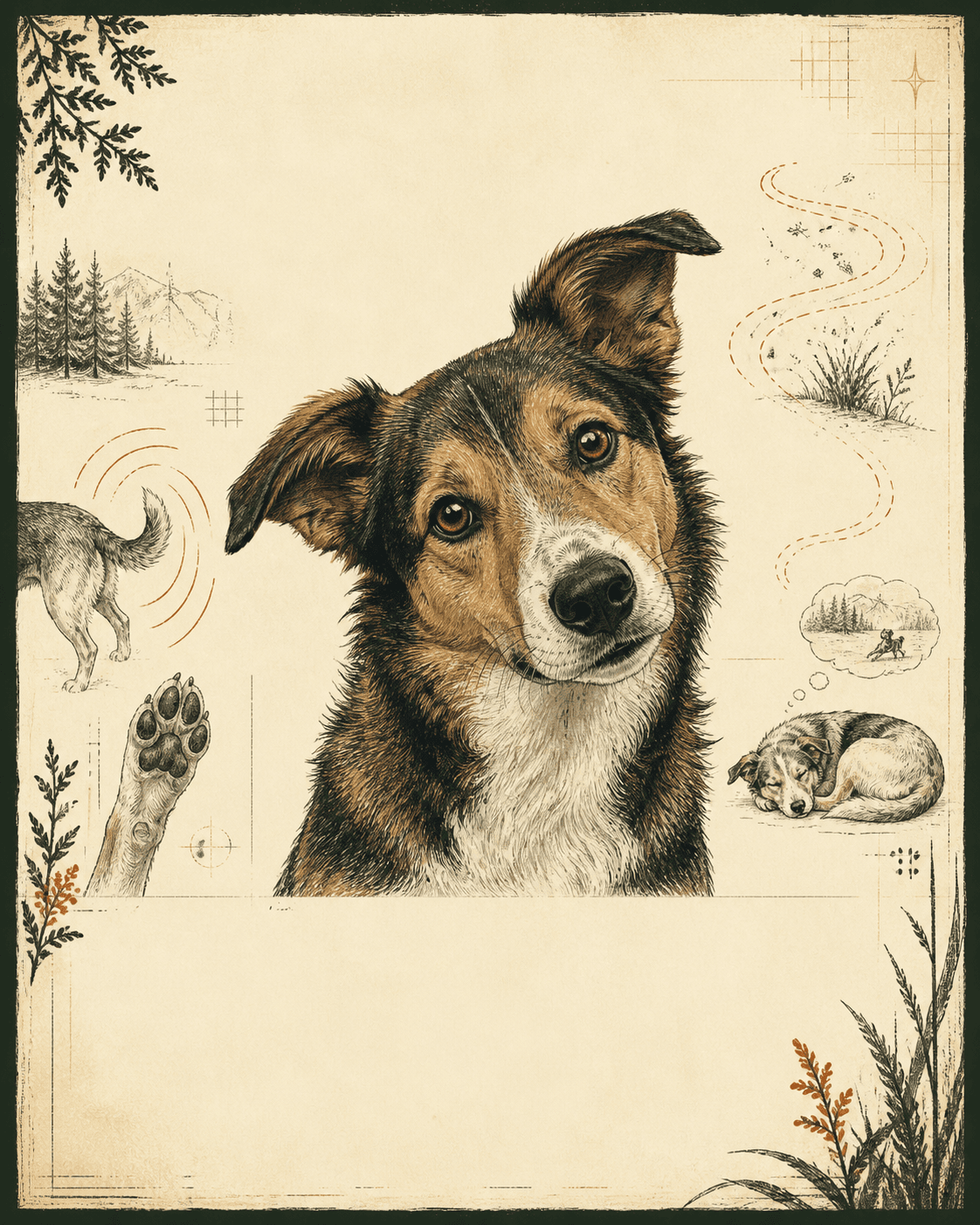
Why Do Animals Do That? · Dog Edition
DECODED
31 Everyday
Dog Behaviors
Showing Why does my dog suddenly get the zoomies?
The short answer
Those wild laps are commonly called frenetic random activity periods, or FRAPs. They often show up around excitement, transitions, pent-up energy, or stress release, especially in younger dogs.
Read the whole dog
Happy zoomies usually come with a loose, bouncy body, play bows, and easy recovery. A frightened rush looks tighter: tucked tail, wide eyes, lowered posture, or frantic attempts to escape.
What to do next
Give the sprint a safe surface and a fenced or enclosed route. Move breakables, block stairs and roads, and let the burst pass instead of chasing the dog. Regular sniffing, play, training, and age-appropriate movement can reduce badly timed explosions.
Urgent if there is collapse: Collapse is an emergency. Contact a veterinarian promptly if the running is new and disoriented, looks painful, cannot be interrupted, or repeatedly follows a frightening event.
Educational guidance only. This explorer cannot examine your dog or diagnose a medical or behavioral condition.
The field-guide promise, in your pocket
Each entry separates observation from interpretation, and settled evidence from the best working explanation.
Review every sourceName the observable behavior before assigning a motive. Frequency, posture, trigger, and recovery matter.
Use veterinary guidance and published research, with uncertainty written plainly instead of buried.
A wag is not always happiness. A growl is not disobedience. A mess after you leave is not revenge.
Why Do Animals Do That? · Dog Edition
DECODED
31 Everyday
Dog Behaviors
The complete 49-page field guide
Decoded groups the signals you see every day into six quick sections. Every one of the 31 complete entries gives you the short answer, the context that changes it, a practical next step, and the line where professional help makes sense.
Built to be useful, not reckless
The explorer and book teach observation and safer first responses. They do not diagnose disease, prescribe treatment, or replace a veterinarian or credentialed behavior professional. Sudden changes, pain, breathing trouble, neurologic signs, self-injury, and bite risk are always escalated.